what i think a coming of age film is, a film that puts a view pont on a certain timing, showing a growth and maturatiy from charaters throughout the film- usually youth to adult. It usually ends with characters learning something new
what google says; In film, coming of age is a genre of teen films. Coming-of-age films focus on the psychological and moral growth or transition of a protagonist from youth to adulthood. Personal growth and change is an important characteristic of this genre, which relies on dialogue and emotional responses, rather than action.
5 coming of age films:
mean girls
grease
the breakfast club
sixteen candles
dirty dancing
Mean girls is a coming of age film as it follows Cadys experences throughout highschool, (growing from a youth into adulthood) The protagonist Cady is represpented as inquisitive - as shes new - and easy considereing she gets bossed around by Janice and Regina, but also sneaky in what she does to try and sabotage Reginas life.
Spirited away is a coming of age movie (but its not the typicalt one with partys, alcohol and drugs) as it tracks and follows the growth - not only in age but confidence and skills - of the main character. Chirho also faces her fears throughout the film. The character processes and learns new things in the film. Its also about love and friendship, aswell as trust.
--
The director blends realism and fantasy by letting the reader know they, too, are “in on it,” which was what the director tried to do when describing the delusion. The writer can help his audience “suspend disbelief” by going into the fantasy entirely. Everything is seen through the non-real lens, so the reader trusts the writer to stay-with-it. The writer creates an alternate reality or dreamscape (Alice in Wonderland), one that takes up the largest part of the book.The storyline is set in the real world, but infused with non-real aspects.
Chihior learns how to have more courage and face her fears. Shes learns to not take advantage of things - eg her parents - and to listen more. She also learns to take more care and be cautious, but also be brave.
Chihiro constantly is struggling to find her own way by herself, and relies on others to help and guide the way. She struggles to make friends at first, but people soon see the good side of her, despite being different.
A love story is presented in Spirited away, not only between chihiro and Haku - forming a very strong friendship or bond, but also between different charaters, such as the witch and her baby, Chihiros monster and the "evil" witch, plus many more.
Be yourself and be brave as you wwill aslways have good people around to support you.
The erdely are stereotypically seen as weak and feeble, mostly mean and evil- typically in fairlytales (as no one expects a little old erson to be the bad guy) or either very lovely and wouldnt seem to hurt a fly.
Kamaji didnt want anything to do with chihiro at the start, but then he saw sense and helped her out.
Yubaba is very powerful and is mean and controlling - wicked
Akio is a nice person who is very curious but cant seem to take responsibility
Yuko acted cold at first, but soon turned around and ated as a friend
Zeniba was mean at first, but the audiences prespected changed when chihiro went to go and visit
At the start of the mocie, Zeniba is represented as mean and angry. This can be seen whe she uses dramatic actions and creates a big scene, the dialogue also proves this. In the scene when we first see her, she conforms to the stereo type of being cold and heartless, however towards the end of the movie, we see that she has chnaged when in a much calmer atmosphere.
Yubaba is controlling and quite selfish. She took away Hakus freedom so she could have her own servant. however, we do see the soft side to her when looking after her baby. She is still controling when it comes to him, and doesnt let him leave her sight. I think Yubabas loss of selfcontrol is a metaphor that power can get to your head, and as shes not very well liked (people HAVE to like her as shes in control) that she seaks love - as most of its fake, and thats why she has to control everything and force people close to her.
Thursday, April 30, 2020

Friday, March 27, 2020
“The
ending of Slumdog Millionaire is powerful; for the narrative, the characters
and the audience.”
•Respond to this statement with your
opinions, supporting your ideas with evidence from the narrative and the film
form. Such as, how the ending concludes a number of narrative structures,
including the equilibrium theory, binary oppositions and the enigma theory and
evaluate how these conclusions contribute to making the end powerful [15]
The ending of slumdog millionaire is very powerful for the narrative as it was a doomed love story from the begining, (which you wouldnt expect from a hollywood film.) The two lovers - Jamal and Latika - are both from unforchanate backgrounds where they lived in slums most there life and didnt have much money. Jamal goes onto win lots of money when applying to be on "who wants to be a millionaire" in hope of reaching out to Latika and finally finding her after searching for years. Slumdog milllonaire uses a circular narrative, meaning it starts at the end, the flashes back to recap events throughout the film. The narrative of the story is dominant as (Danny Boyle) concudes three story lines through out the film. Jamal getting forcefully questioned and interrigated by the police - as they think he was cheating on the show "who wants to be a millionaire." Jamal trying to win the money on the show, and Jamals life story - the events that lead him to knowing the answers of the questions. This stratagy is powerful for the audience as it always shows different things at different times, making it more engaging. all of the story lines (known as the 3 strands) follow Todorovs theory as all the story lines are linear. Theyre just not presented in a linear order. Flash backs also show us the difference between the situations and how Jamal dealt them all. It makes us aware of the type of character he is and shows us what type of person he’s become through all his life decisions.
 The endings powerful for the charaters as it shows Binary opposites between Jamal and Salim (the two brothers.) Jamal displayed as good whereas salim is bad. The audience is constantly reminded that salim is bad due to his actions of greed throughout the film. however, towards the end the audience learn that salim has changed and sarcrificed himself so jamal and Latika could fine eachother, end up together and live happily ever after.
The enigma theory is applied constantly throughout the film, however its hghlighted in the opening scene the most. When we question:
Who are those people?
Why is he in that situation?
What has he done that’s so bad?
What’s going on?
Wednesday, February 5, 2020
Slumdog Millionaire context
Mumbai is a city that faces many challenges and those challenges are large because of its immense size and rapid growth. Each year thousands of people move to the city of Mumbai from rural areas. People who move think that they will have a better quality of life. However, cities such as Mumbai face lots of challenges, and the people who move there do not always have a better quality of life. Not a drop of sewage in Mumbai is treated today before it goes to the sea. In the next 3 to 4 years we will treat every single drop of sewage in Mumbai. Mumbai suburban railway transports 7 million people
a day today. In the past two years, we have planned 200 kms of metro work, started work on 120 km and all 200 kms will be ready for use by 2022. This can carry 9 million passengers.
‘The city offers sanctuary by night, before becoming a vibrant colour palette of all life’s hues by day. The sea gleams with hundreds of little suns reflecting off the tops of its modest waves, children run out of school pell-mell with their bright plastic slippers and their uniforms in disarray. Vendors move across the metropolis, making sure that all the cogs in this old machine are well-oiled, their saris and dhotis bright in the midday sun.’ —Ambarin Afsar
Mumbai is good for business, if you have the know-how. And also mischief! It is really a city about money.’—Afzal
Thursday, January 16, 2020
Tuesday, September 17, 2019
Mean Girls
Laura Mulveys representation theory focuses on the idea of the male gaze. The idea of the male gaze is that film directors - such as Gary Ross and Mark Waters - place woman in films to draw people in who may find them attractive. Laura Mulveys believes that males would drool and provide more interest over films with "sexy" people in, rather then people with "ugly" or who the world would see as "unattractive." I believe that this apply for woman as well. The majority of us are guilty of only wanting to watch a film as a "hot" or "attractive" person is in it. After a while, the male gaze gently cancels out the fact that woman are more than sex symbols, and they're actually good actors.
In this scene, the male gaze is clearly shown. The 4 girls are in revealing clothes (assuming they'll get more attention) I think that Mark Waters purposely represented them like that to attract the attention of teen males/females - providing them with more entertainment.
Henry Jenkins theory has the constant idea of always breaking the rules of Genre. For example, One film has lots of different element of Genres. Eg. Shaun of the dead. In the Shaun of the dead, people could argue that its a horror film. Others could argue that its a romance film, and also even a comedy film. Henry Jenkins idea was that things are changing dramatically over time to try and make the audience more interested and get lost in the magic of film.In my opinion, Mean girls is a comedy, romance and drama all in one. It also has elements of horror (the Halloween party, and when Regina gets hit by the bus - at the end)
The audience theory places more focus on the consumer, or audience, instead of the actual message itself by asking “what people do with media” rather than “what media does to people." In mean girls, they show this theory by - instead of having ,media - they have the burn book. The burn books about girls writing bitchy and snakey things about other girls. I think this has been put in place to make the film more entertaining (because - for some weird reason - we are entertained by watching someones life fall apart in a movie) the burn boo is more about what people do with the information that they're told, rather than what the information hat got out, does to the people. skip to 2mins 26 when watching the clip. At 3mins 25, Janice says something that sums up this theory perfectly.
Todorov's narrative theory suggests that all narratives follow a three part structure where they begin with equilibrium, where everything is balanced, progress as something comes along to disrupt that equilibrium, and finally reach a resolution, when equilibrium is restored. Mean Girls follow. Mean Girls follow this rule. For example: Cady joined s new school. She then meets her 2 first and best friends (Damien and Janis), she then meets the plastics. Shes told to spy on the plastics. She soon spends all of her time with the plastics and looses herself. She then becomes a plastic and makes lots of things up. The school erupt and act like they're animals. Cady apologizes and joins the mathletes. She then finds herself again and becomes friend with everyone after breaking peoples trust.
Mise-en-scene
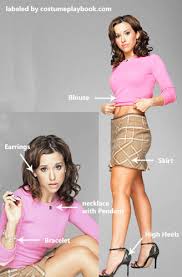
Costume: the girls wear short and defining clothes. This could represent that they're confident and like to show off. Also the fact that they're wearing pink imply that the genre is a teen movie and they possibly have quite girly personality.

Character expression and movement: Karen is baffled and shocked in this picture. The fact her jaw is hanging wide open backs up the fact that she cant believe something shes seen, or heard on the phone.
 In this frame, its a dark and gloomy, illustrating that something shady could possibly be going on. Also, lighting are used to highlight facial features.
Editing: this scene shows the different divides between the girls, not only does it show that they're on different lines. It could also show the differences between the girls. Not only does the lines divide them, but also the mise-en-scene to go with it does. For example, they're all wearing different things that define their personality's. eg. Kady is wearing quite modest clothes compared to the two girls in the 2 TOP corners. Also, if you watch Kadys face during Gretchen's and Karens conversation, you can see how shes feeling. The settings of the different girls describe what their homes are like and where about they're from (rich, poor ect). by the looks of it, they all come from fairly rich family's -as the setting tells. The settings also show what each of their personality's are like (eg. their interests and hobbies and their characteristics)
Cinematography: In this scene, the camera ,goes around all the tables to possibly show that all the different friend ship groups are surrounded and stuck in there own little circle (lunch time table) due to people putting labels on them. It could also suggest that they're not "allowed" to venture outside there labels and they ca only be that one thing that they're set to be.
Laura Mulveys representation theory focuses on the idea of the male gaze. The idea of the male gaze is that film directors - such as Gary Ross and Mark Waters - place woman in films to draw people in who may find them attractive. Laura Mulveys believes that males would drool and provide more interest over films with "sexy" people in, rather then people with "ugly" or who the world would see as "unattractive." I believe that this apply for woman as well. The majority of us are guilty of only wanting to watch a film as a "hot" or "attractive" person is in it. After a while, the male gaze gently cancels out the fact that woman are more than sex symbols, and they're actually good actors.
Henry Jenkins theory has the constant idea of always breaking the rules of Genre. For example, One film has lots of different element of Genres. Eg. Shaun of the dead. In the Shaun of the dead, people could argue that its a horror film. Others could argue that its a romance film, and also even a comedy film. Henry Jenkins idea was that things are changing dramatically over time to try and make the audience more interested and get lost in the magic of film.In my opinion, Mean girls is a comedy, romance and drama all in one. It also has elements of horror (the Halloween party, and when Regina gets hit by the bus - at the end)
The audience theory places more focus on the consumer, or audience, instead of the actual message itself by asking “what people do with media” rather than “what media does to people." In mean girls, they show this theory by - instead of having ,media - they have the burn book. The burn books about girls writing bitchy and snakey things about other girls. I think this has been put in place to make the film more entertaining (because - for some weird reason - we are entertained by watching someones life fall apart in a movie) the burn boo is more about what people do with the information that they're told, rather than what the information hat got out, does to the people. skip to 2mins 26 when watching the clip. At 3mins 25, Janice says something that sums up this theory perfectly.
Todorov's narrative theory suggests that all narratives follow a three part structure where they begin with equilibrium, where everything is balanced, progress as something comes along to disrupt that equilibrium, and finally reach a resolution, when equilibrium is restored. Mean Girls follow. Mean Girls follow this rule. For example: Cady joined s new school. She then meets her 2 first and best friends (Damien and Janis), she then meets the plastics. Shes told to spy on the plastics. She soon spends all of her time with the plastics and looses herself. She then becomes a plastic and makes lots of things up. The school erupt and act like they're animals. Cady apologizes and joins the mathletes. She then finds herself again and becomes friend with everyone after breaking peoples trust.
Mise-en-scene
Costume: the girls wear short and defining clothes. This could represent that they're confident and like to show off. Also the fact that they're wearing pink imply that the genre is a teen movie and they possibly have quite girly personality.
Character expression and movement: Karen is baffled and shocked in this picture. The fact her jaw is hanging wide open backs up the fact that she cant believe something shes seen, or heard on the phone.
Cinematography: In this scene, the camera ,goes around all the tables to possibly show that all the different friend ship groups are surrounded and stuck in there own little circle (lunch time table) due to people putting labels on them. It could also suggest that they're not "allowed" to venture outside there labels and they ca only be that one thing that they're set to be.
Wednesday, May 22, 2019
Fighting with my family
As a young girl, Page feels like an outsider when she leaves to go to america. This is shown when she gets to the house and meets the other typical barbie american doll stereotypes. Page sees that they're all tanned and wear very little clothing (costume - mise-en-scene) PAge feels like a outsider because shes walked into a completely different world to her small world.
In fighting with my family, class is shown when pages' manager shouts at her in the ring because hes angry. He sees pages (from Britain) as a lower class due to the facts shes from a cancel estate in Norwich, and he shows his superiority and dominance as he makes page feel small through sound.
The representation of disability is positive. This is evidence through the casting of a blind character, Callum, and his character expression and movement (an element of mise - en - scene) as well as his dialogue throughout the film. Callum challenges the conventional representation of disability of being weak, passive, an outsider etc. Instead, with support from the group callum joins in and learns to wrestle just like the able bodied people.
Thursday, May 9, 2019
Subscribe to:
Posts (Atom)
Coursework
Coursework Analysis and Planning - Teen Movie Task 1: > Research 3 existing professional-made film openings from the genre you are wanti...

-
Mumbai is a city that faces many challenges and those challenges are large because of its immense size and rapid growth. Each year thousand...
-
Coursework Analysis and Planning - Teen Movie Task 1: > Research 3 existing professional-made film openings from the genre you are wanti...

